ENERGY
ENERGY
Supplying in-demand energy products to international markets
The Port of Prince Rupert receives propane, coal, and biofuels from across Western Canada, and connects these key energy suppliers to overseas markets in western Europe and Asia.
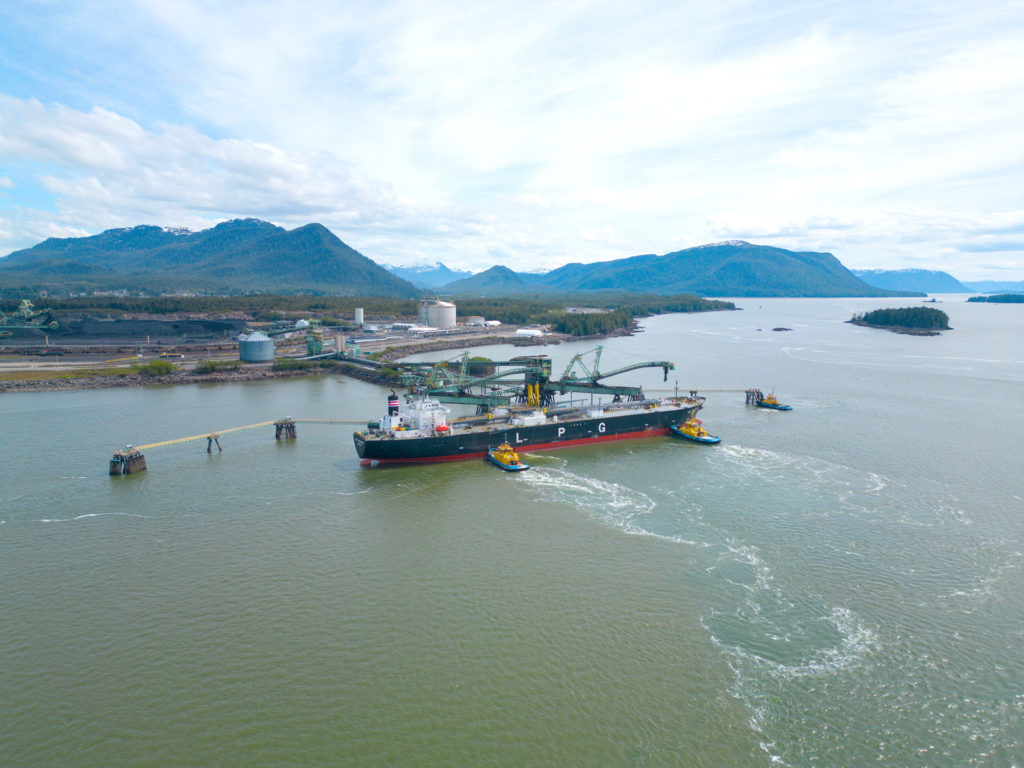
The Prince Rupert port provides much needed tidewater access to global markets for in-demand Canadian energy products. Trigon Pacific Terminals provides an export point for the vast reserves of metallurgical and thermal coal. AltaGas’ Ridley Island Propane Export Terminal (RIPET) is Canada’s first propane export facility. The Westview Wood Pellet Terminal is the first North American purpose-built wood pellet export facility for use in power generation. To meet increasing global demand for low-carbon transition fuels, the Port is working to expand its liquid bulk storage facility through development of the Ridley Island Energy Export Facility (REEF), a large-scale liquefied petroleum gas (LPG) and bulk liquids terminal and marine berthing and loading facility at the Port of Prince Rupert.

Clean energy, global opportunities, competitive advantages: The Ridley Island Propane Export Terminal (RIPET) provides new market access for western Canadian propane producers.
AltaGas’ Ridley Island Propane Export Terminal (RIPET), Canada’s first propane export facility, is located on a 24-acre brownfield site approximately 10 km south of Prince Rupert, British Columbia. The terminal leverages CN’s existing railway network, and the deepest harbour in North America to offer Canada’s natural gas producers direct access to international markets and a 15-day shipping advantage vs. the U.S. Gulf Coast.
RIPET is capable of storing 600,000 bbls or 1.2 million tonnes of propane per year. The terminal offloads approximately 50 to 60 rail cars of liquid propane from BC and Alberta each day. It transfers the propane to intermediate pressurized storage bullets and then cools it so that it can be stored and shipped at atmospheric pressure. Chilled propane is then loaded onto Very Large Gas Carriers (VLGC) and delivered to global markets through approximately 20 to 30 marine transport shipments per year.


Explore Our Commodities:



Fact Sheets:


