Aquatic Invasive Species
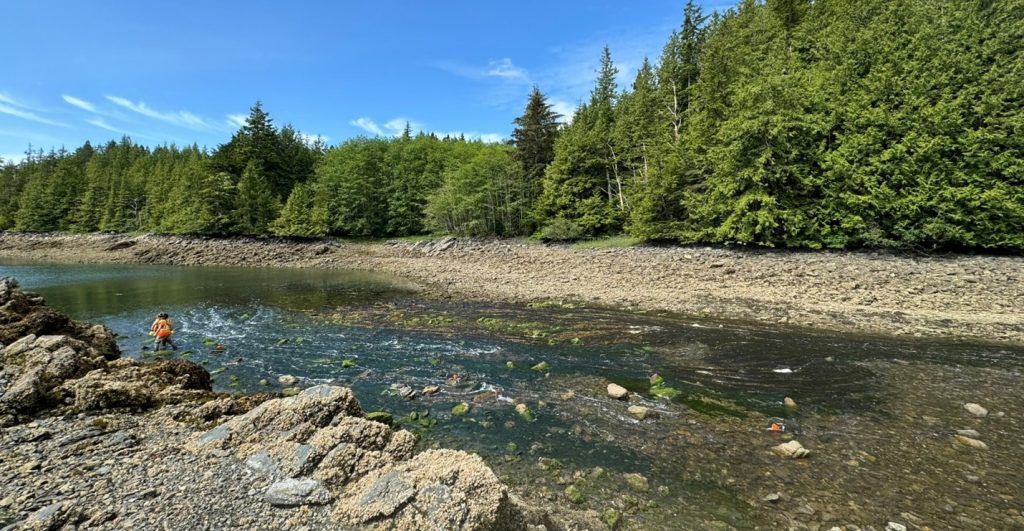
What are aquatic invasive species and why are they a concern?
An aquatic invasive species is a species of marine or freshwater plant or animal that is introduced to an area that is outside of its natural range. Introduction of a non-native species can cause damage to the host ecosystem and its indigenous plants and aquatic life as they have no natural predators and usually outcompete native species for resources, predate on local vulnerable species and/or have the potential to drastically alter habitat, rendering it inhospitable for native species. Invasive species also threaten fisheries and aquaculture operations and subsequently local economies and recreation.
In ports that host seaborne trade, monitoring and early detection of potential invasive species is key. Vectors for the introduction of invasive species can include hydrographic processes, foreign waterborne debris, and recreational and port-related vessel traffic. In particular, PRPA works closely with Transport Canada to ensure that commercial vessels manage their ballast water (sea water pumped into vessels for the purpose of stabilization) according to international convention, including mid-ocean ballast exchange programs. Prevention, early detection, fast response and successful management can limit the transfer and establishment of alien species from one region to another.
Aquatic invasive species impact ecosystems worldwide and have already been responsible for significant devastation of some native fish species and fisheries in Canada. There are several marine species of interest that are monitored for in the waters surrounding Prince Rupert.
Which aquatic invasive species are of interest in the Prince Rupert area?
European Green Crab
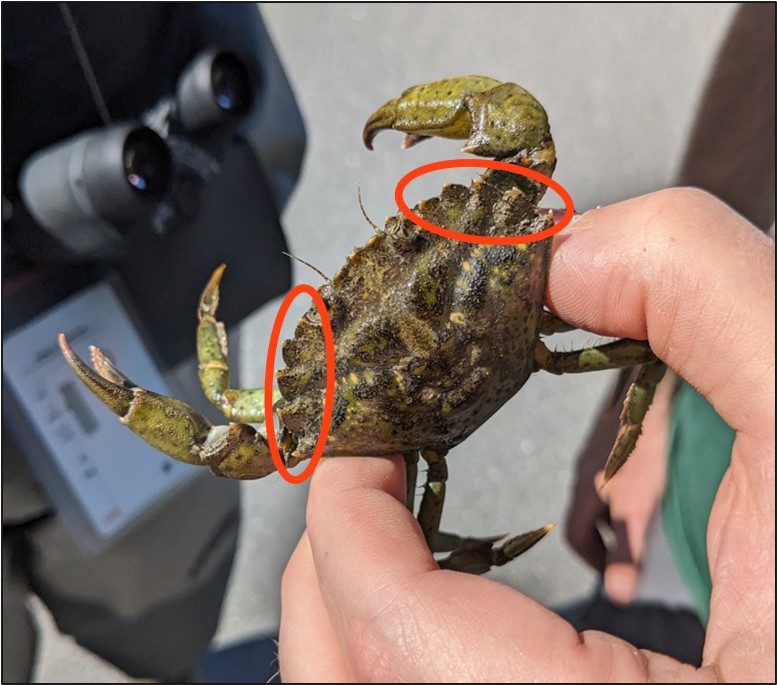
The European Green Crab, Carcinus maenas, (hereafter, called EGC) is perhaps the biggest threat to marine ecosystem health on BC’s coast. Despite its small size, this voracious predator can destroy eelgrass and shellfish beds, outcompete Dungeness crab and other species for habitat and food with their main food source being shellfish. They can cause a decline in biodiversity where they are introduced, as they have no predators and are aggressive hunters. The initial vector of introduction of this invasive crab from European to Canadian waters was likely from larval transfer via merchant ships, and experts believe it has made its way to the west coast by transfer of the larvae from ballast water. It was introduced to British Columbian waters in 1998, and the species is slowly spreading northwards – their larvae are likely moving with ocean currents. The European Green crab can be easily mistaken for other species of crab, particularly kelp crabs, juvenile Dungeness crabs and shore crabs, but their distinguishing feature is five distinct spines on either side of their eyes and a pentagon-shaped carapace. Despite its name, they are also not always green, but can be yellow, black, orange or purple as well. If you think you may have found an EGC, please report it to the DFO hotline below.
This invasive crab is present in parts of the south and central coast, on Vancouver Island and was detected in southern Haida Gwaii in July 2020, as well as Alaska in 2022. The first live adult EGC was found in the Prince Rupert region in August 2023.
Tunicates and Bryozoans
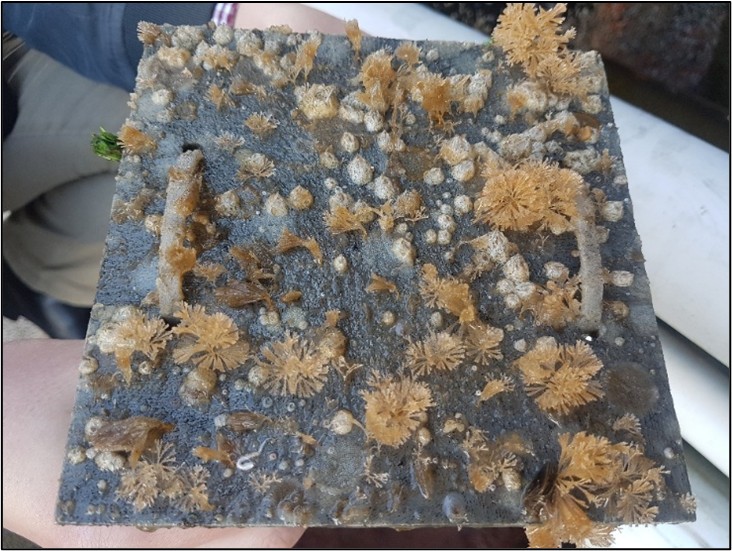
Also of interest are non-native tunicate (or sea squirt) species, as well as non-native bryozoans (colonial, filter-feeding organisms). Both tunicates and bryozoans are small marine invertebrates that spend most of their lives attached to a substrate such as rocks, on the undersides of boats or on the sides of docks and pilings. There are many native species present in the waters around Prince Rupert, and there are several species of non-native tunicates that are found on BC’s coast, with a few that could be of concern in the region.
How are aquatic invasive species monitored at PRPA?
PRPA’s Aquatic Invasive Species Program consists of two components – participating in the Department of Fisheries and Ocean’s Settlement Plate Program to monitor for non-native tunicates and bryozoans and independently monitoring for European Green crab adults and larvae.
Settlement Plate Program
In 2012, the Port Authority began a partnership with the Department of Fisheries and Oceans (DFO) and Coast Mountain College (CMT; formerly Northwest Community College), using the Smithsonian’s Plate Watch program methods, to launch one of only a handful of aquatic invasive species monitoring programs on the BC coastline. With support from Fisheries and Oceans Canada, the local program reports its findings to the coast-wide network of experts and contributes to an early detection system for invasive species not previously present in the northwest Pacific. PRPA began monitoring on an annual basis in 2012, and the Metlakatla and Lax Kw’alaams First Nations joined the program in 2018. The program is now called the Settlement Plate Program and runs annually from June to September.
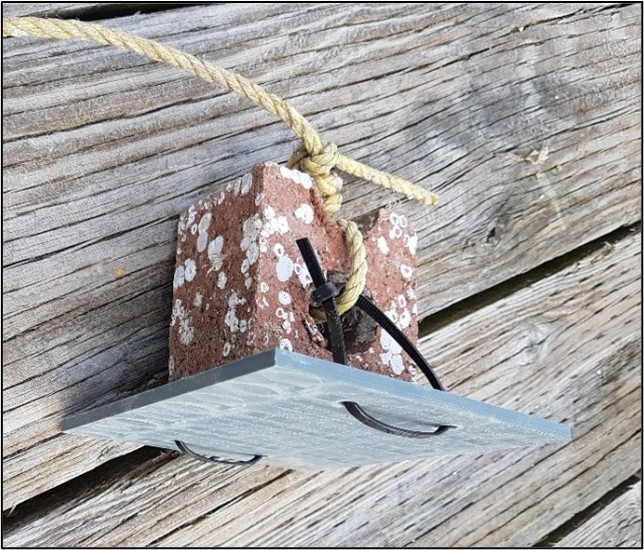
The program utilizes the simple device of a clean, flat tile or “plate” tied to a brick (for weight), which is then deployed from a pier or floating dock. The plate is secured approximately one metre underwater where the largest percentage of target species can be found. Larval forms will attach to the bottom of the plate and continue to grow throughout the deployment period. The plate will ultimately collect a sample of the organisms present in the water in that particular area. Typically, 10 or 20 plates are deployed at each marina in Prince Rupert and Port Edward, as well as the Metlakatla and Lax Kw’alaams marinas. In the fall, plates are collected and analyzed by DFO, and findings are reported back to the Working Group. Coast Mountain College has provided their biology lab space throughout this program to use for analysis of plates, and students from CMT’s Applied Coastal Ecology program have taken part in the program.
To date, the golden star tunicate (Botryllus schlosseri) and the violet or chain tunicate (Botrylloides violaceous) have been detected periodically at several sites in Prince Rupert and the surrounding area, but their presence has not been found in significant abundance. These species are not of critical concern, but the program continues to monitor for them and other non-native species year-round. Tunicates are incredibly difficult to eradicate and require costly and time-consuming techniques. Further monitoring is required to understand the extent of spread of these non-native tunicates and if they have truly established themselves in the area. Other non-native organisms found through this program include the tunicate Ascidia zara, and the bryozoans Schizoporella japonica and Alcyonidium pedunculatum. The highly invasive tunicate Didemnum vexillum has not been detected in the waters around Prince Rupert.
European Green Crab Monitoring
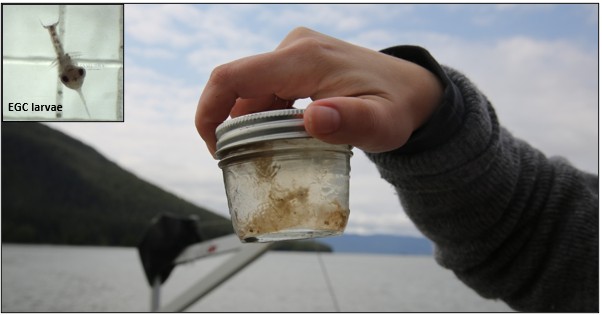
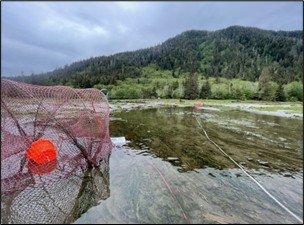
Both adult and larval forms of European Green Crab (EGC) are monitored at several locations by the Prince Rupert Port Authority’s Environmental Sustainability Team. The adult trapping program consists of deploying Kufa folding prawn traps along intertidal areas over a 24-hour period, as well as beach walks, to look for adult EGC. PRPA also established a zooplankton program in 2017 to monitor for the larval forms of EGC. Several sites in the inner and outer harbour are sampled frequently using a plankton tow net. Samples are then analyzed by a consultant for the presence of any EGC larvae. An inventory is also taken of general zooplankton diversity and abundance. Larval EGC were detected in several samples in 2019 and 2020 and adult EGC were officially found in the Prince Rupert region in August 2023. This discovery launched the DFO’s North Coast EGC Response Initiative in 2024, which involves PRPA and all Nations in the region. Each group contributes a significant amount of effort conducting detection trapping in their respective regions to assess the extent of the EGC, understand where they have established themselves and then to manage populations through depletion trapping. Efforts also contribute to the development of DFO’s aquatic invasive species management strategies.
In addition to establishing critical baseline data and a registry of species in the region, PRPA’s Aquatic Invasive Species Program provides access to a bigger picture of the arrival and spread of invasive species along the north Pacific coast. The collaborative network also allows for improved data sharing and participation in a greater mobilization of management strategies.
Report a Sighting
Reporting a European Green Crab:
If you think you have found a European Green crab, take photos and call 1-888-356-7525 or email DFO.AISPacific-EAEPacifique.MPO@dfo-mpo.gc.ca to report it.
Learn More
Read more about these and other invasive species in British Columbia and Canada at these Fisheries and Oceans Canada links.
Aquatic Invasive Species: https://www.dfo-mpo.gc.ca/species-especes/ais-eae/about-sur/index-eng.html
European green crab:
https://www.dfo-mpo.gc.ca/species-especes/profiles-profils/europeangreencrab-crabevert-eng.html